

 Image 1 of 1
After leaving Bible college, I became increasingly frustrated by sermons I would hear. These pastors seemed to take one verse and then create an entire theology around that verse, rather than looking at its context. What’s more, they would create 3 arbitrary applications and spend all of their time on that. Where’s the biblical Hebrew? The Greek? The Jewish culture? The topography? The historical context?!
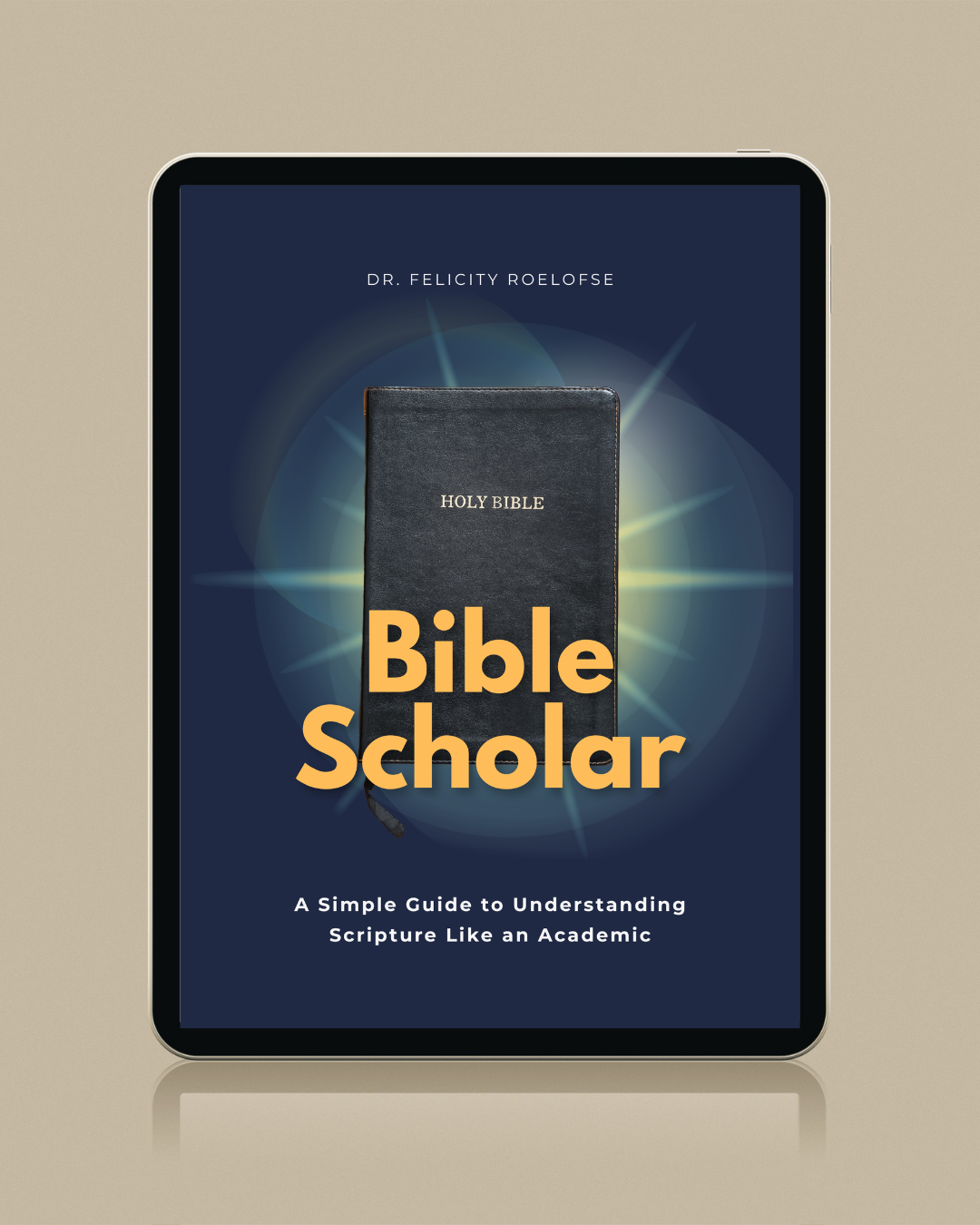
Well, I realized — why not just write an easy guide on how to do this? Maybe not everyone knows how to look for those things. So that’s why I wrote this. I’ve taken everything I’ve learned across my degrees into an easy guide for you, so you can read the Bible like a scholar. Context is so important to a passage — it ensures we understand the author’s intent, sees a passage within the scope it was written, and recognizes how the time period, geography, or political climate all impact the passage. It also helps you respond to arguments of, “Well, that was contextual to the time.” How do you know that? Well, now you’ll know how to determine if a passage was purely contextual or still relevant to today.
My hope is that after reading this guide, you’ll develop some new tools in your Bible study time. Look, I’m not expecting you to spend hours on a passage as if you were writing a thesis. But, I do want to equip you with hermeneutics, exegesis, and lower and higher textual criticism (you’ll learn what these mean in the guide). Note that this is a guide, not a book, so it should be easy reading. And hey, it’s free! I want to equip more people with these tools that I got to learn in university.
After leaving Bible college, I became increasingly frustrated by sermons I would hear. These pastors seemed to take one verse and then create an entire theology around that verse, rather than looking at its context. What’s more, they would create 3 arbitrary applications and spend all of their time on that. Where’s the biblical Hebrew? The Greek? The Jewish culture? The topography? The historical context?!
Well, I realized — why not just write an easy guide on how to do this? Maybe not everyone knows how to look for those things. So that’s why I wrote this. I’ve taken everything I’ve learned across my degrees into an easy guide for you, so you can read the Bible like a scholar. Context is so important to a passage — it ensures we understand the author’s intent, sees a passage within the scope it was written, and recognizes how the time period, geography, or political climate all impact the passage. It also helps you respond to arguments of, “Well, that was contextual to the time.” How do you know that? Well, now you’ll know how to determine if a passage was purely contextual or still relevant to today.
My hope is that after reading this guide, you’ll develop some new tools in your Bible study time. Look, I’m not expecting you to spend hours on a passage as if you were writing a thesis. But, I do want to equip you with hermeneutics, exegesis, and lower and higher textual criticism (you’ll learn what these mean in the guide). Note that this is a guide, not a book, so it should be easy reading. And hey, it’s free! I want to equip more people with these tools that I got to learn in university.